Pillow guide · Materials and care
Inside a Silk-Filled Pillow: Fibers, Support, and Care
A silk-filled pillow is less about instant loft than considered comfort: a gentle, breathable feel shaped by the way its fibers are layered, enclosed and maintained. Here is how to read the construction—and decide whether silk belongs in your sleep routine.
There is a particular quietness to silk. It catches light without insisting on it, rests smoothly against the skin and brings a sense of ease to even the most ordinary daily ritual. In a pillow, however, silk is more than an elegant surface. It can be the filling itself: fine silk fibers arranged in layers to make a soft, relatively light interior with a distinctive feel.
That distinction matters. A silk pillowcase places silk on the outside of a pillow whose filling may be foam, feather, down or synthetic fiber. A silk-filled pillow uses silk floss inside, where the way fibers are assembled has a direct bearing on the pillow’s loft, firmness and maintenance. Understanding that construction is the starting point for making a thoughtful choice—one guided not by the word “silk” alone, but by the complete design.
Silk-filled pillows are not automatically the right match for every sleeper. Some are deliberately flatter and denser; others combine silk with another material to help preserve shape. Their support depends on those details, as well as on your sleep position, mattress and preference for a higher or lower pillow. The most useful questions are practical: What is the filling made of? How is it layered? Can the cover be removed? And what does the care label actually permit?
What “silk filling” means
Silk is a natural protein fiber produced by silkworms. For bedding, long silk fibers can be prepared as floss and formed into layers. Rather than behaving like a single sculpted block, layered silk filling has a more relaxed, fibrous character. Its hand can feel soft and supple, while the pillow’s overall profile is determined by the amount of filling, its density and how securely it is held in place.
Mulberry silk is produced by silkworms raised on a diet of mulberry leaves and is commonly used in bedding. The term describes the silk’s source; it does not, by itself, tell you whether a pillow will be firm, lofty or especially supportive. Two pillows made with mulberry silk may feel quite different because their filling weight, layering, casing and construction differ.
Some descriptions also refer to long-strand silk or silk floss. These terms indicate aspects of the fiber or its preparation, but they are not substitutes for a clear specification of the finished pillow. Look for the percentage of silk in the filling and whether other fibers or a separate support core are included. A pillow advertised as silk-filled may be entirely silk, or it may combine silk with polyester or another material.
The outside fabric deserves equal attention. A cotton shell can give the pillow a familiar, structured finish; a silk shell creates a different surface feel and may be removable for separate cleaning. Neither choice tells the whole story about the interior. Read the shell and filling as two distinct parts of one object.
How silk compares with foam and other fills
Comparisons are most useful when they focus on the way materials behave, rather than turning them into a contest. Foam, down, polyester and silk each answer different preferences. Even within one material family, construction can shift the experience markedly.
- Silk floss: Often chosen for a soft, breathable and comparatively light feel. Its support depends on the amount and arrangement of the layers; a flatter silk pillow can feel quite unlike a thick, lofty one.
- Memory foam: Usually more sculpted and resilient, with a shape that can respond to pressure. It may feel denser and less yielding than a loosely layered fiber filling, although foam products vary in firmness, ventilation and design.
- Down and feather: Known for compressibility and a plush, adjustable character. The exact feel depends on the blend and fill power, while some people prefer to avoid animal-derived fills or require particular allergy considerations.
- Polyester fiberfill: A widely used synthetic option, available in many levels of loft and firmness. It can be convenient to maintain, though the feel and durability depend on fiber quality and construction.
- Blended filling: Combines materials to balance characteristics—for instance, soft fibers around a firmer core. Check the stated proportions, since a blend will not behave exactly like a pillow filled only with silk.
Breathability is often part of silk’s appeal. The experience of temperature, though, is influenced by more than the filling: the casing, pillowcase, room conditions and bedding layers all play a part. No natural fiber can promise that every sleeper will feel cool in every setting. A pillow’s cover can also change the first impression—cotton may feel crisp, while silk tends to feel smooth against the face.
Claims about allergy protection should be read carefully. A material may be described as hypoallergenic, but that wording is not a guarantee that it will suit every person or address every allergy. Sensitivities, dust exposure and care habits matter. If allergies are a concern, assess the entire pillow, including its shell and cleaning instructions, and seek advice from a qualified health professional where appropriate.
Support is a matter of construction
A pillow’s purpose is to help keep the head and neck comfortable in relation to the rest of the body. The right height and firmness are personal and depend partly on sleeping position, shoulder width and mattress firmness. Silk itself does not determine those outcomes. The pillow’s finished shape and the density of its filling matter more.
A relatively firm, flatter silk-filled pillow may suit someone who dislikes a tall, buoyant profile or sleeps on their front. For a side sleeper, a pillow that compresses too much may feel insufficient; a loftier build could be more comfortable, depending on the person and their mattress. Back sleepers often look for a middle ground. These are useful starting points, not rules: comfort is individual, and persistent pain or disrupted sleep deserves more than a materials-based guess.
When a pillow is new, consider how it feels after a few minutes rather than judging only by its initial softness. Does it retain enough height? Does your head settle comfortably without feeling pushed forward or tipped back? Does the filling shift noticeably? The answers can help distinguish a pleasing surface from adequate support.
Silk floss may be arranged in layers to give the pillow its body. Ask whether the layers are fixed or whether the filling can be adjusted, and whether the pillow is intended to be used as-is or with a separate pillowcase. A description that provides filling composition, dimensions and care guidance is more informative than one that relies on adjectives such as “cloud-like” or “supportive.”
A closer look at blended travel-pillow construction
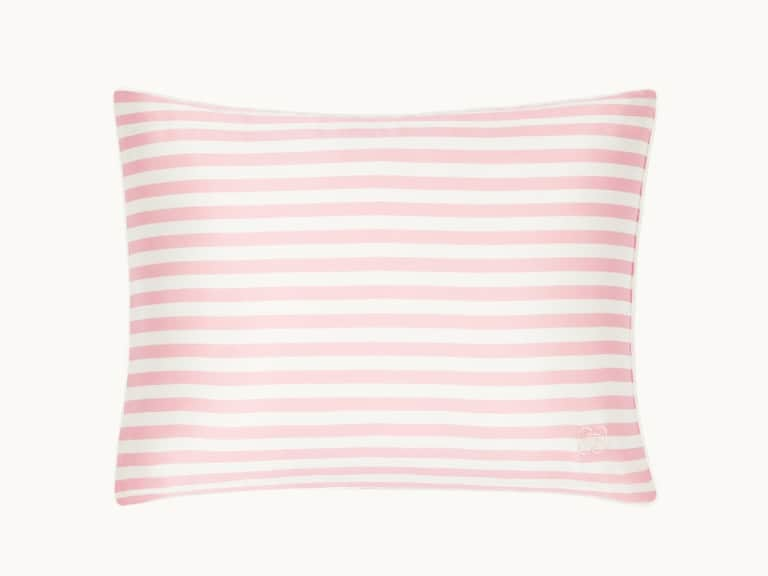
One example of why the details matter is the Silk Travel Pillow – Pink & Ivory Stripe. Its description identifies a 50% long-strand mulberry silk and 50% polyester-core filling, a 100% cotton sateen casing and a 19 momme silk specification. The construction is designed as a portable travel pillow, not as an example of a pillow filled entirely with silk.
That distinction is useful when comparing products. A silk-and-polyester blend may be designed to combine a soft feel with a core that helps maintain loft, while a pure silk-floss pillow has a different filling composition and may have a different profile. The silk specification in a product description can refer to a cover or surface rather than the whole interior, so check precisely which component it describes.
Travel pillows also have a different job from a full-sized bed pillow. Their compact dimensions and portability can take priority over the adjustable loft or broad support expected for a full night’s sleep. A travel design may be a helpful reference for reading construction details, but it should not be treated as a direct substitute for a bed pillow chosen for nightly alignment.
What to check before choosing a silk-filled pillow
Product language can make silk seem like a complete answer. In practice, a few specific questions reveal far more about whether a pillow suits your needs:
- Is the filling composition explicit? Look for the percentage of silk and the presence of any polyester, foam or other support material.
- What is the pillow’s profile? Dimensions, filling weight and descriptions such as flat, medium or firm can help you compare options, though personal comfort remains the final test.
- What is the shell made from? Identify the casing material and whether it is separate from a removable outer cover.
- Can the filling be adjusted? Some designs allow changes to loft; others are sealed and should not be opened.
- How should each part be cleaned? A washable cover does not mean the inner pillow is washable. Confirm the guidance for both.
- Are certifications relevant and explained? If a certification is listed, check what it covers and whether it applies to the filling, shell or finished product.
- Is the construction suited to your sleep habits? Consider sleeping position, preferred height, the climate of your room and whether you tend to change positions at night.
Weight specifications also deserve context. In silk fabric, momme is a measure related to fabric weight; it is not, by itself, a measure of pillow support or the amount of silk floss inside. A 19 momme pillowcase specification, for example, describes the silk fabric rather than proving that the pillow’s filling is pure silk. Keep fabric weight and fill composition separate when making comparisons.
Care: protect the filling, not just the finish
Silk can reward gentle handling, but the right care method depends on the pillow’s exact construction. A removable silk or cotton cover may have different instructions from the interior fill. Some silk-filled pillows are intended to be spot-cleaned or professionally laundered rather than immersed in water. Washing the whole pillow without checking the label can cause the filling to clump, distort or dry unevenly.
Begin with the manufacturer’s care instructions and treat them as specific to that item. If the pillow has a removable cover, take it off only if the design allows it, then launder that cover according to its label. Use a pillow protector beneath the pillowcase if practical; it can help limit the transfer of perspiration, skin oils and dust to the pillow itself.
For a pillow that is not washable, spot-clean small marks only if the care guidance permits. Avoid soaking or aggressively rubbing silk, and do not apply bleach or a harsh stain treatment without confirmation that it is safe for the fabric. If professional cleaning is recommended, tell the cleaner what the filling is and follow any instructions regarding the shell or closures.
Air the pillow periodically in a dry, well-ventilated place, away from prolonged direct sun or excess heat. Letting it breathe can refresh it between washes, but airing is not a substitute for cleaning when a product’s instructions call for it. Avoid storing a damp pillow, and make sure any cleaned components are completely dry before putting them back together.
Routine care can also be simple: use a clean pillowcase, follow the laundering schedule that suits your household and the product label, and handle the pillow gently when making the bed. If the pillow develops a persistent odor, a changed shape or filling that no longer feels evenly distributed, consult the care guidance rather than trying to restore it with heat or force.
How to make a considered choice
Choose a silk-filled pillow for the qualities you can actually assess: its feel, profile, stated filling, shell and care requirements. If you prefer a softer, more breathable-feeling surface and a flatter pillow, a carefully specified silk design may be appealing. If you need a more structured shape or pronounced contour, foam or a blended construction may better match that preference. There is no universal hierarchy—only the right material and shape for a particular sleeper.
When comparing two options, set the poetic language aside for a moment and read the composition line by line. “Silk pillow” might describe a silk cover, a silk filling or a combination. “Silk blend” should prompt a closer look at the percentages. “Washable” should lead to the question of which component can be washed. These small distinctions are the difference between a beautiful purchase and an informed one.
Care is part of the decision, too. A pillow that needs specialist maintenance may be worthwhile if you are comfortable following those instructions; it may be less convenient if you want to put the whole item into a household washing machine. The most luxurious choice is not necessarily the most elaborate. Often, it is the pillow whose support suits your habits and whose upkeep feels sustainable in everyday life.
The final word
A silk-filled pillow brings together fiber, form and daily ritual. Its softness is only the beginning; support comes from the density and arrangement of the filling, while comfort is shaped by the casing, profile and sleeper. Compared with foam or other fills, silk offers a distinct tactile character, but no single material can promise the same experience for everyone.
Read beyond the name. Confirm what is inside, learn what the shell is made of, and separate fabric-weight terminology from filling specifications. Then check the care label before the pillow reaches your bed. With those details in view, choosing silk becomes less a matter of allure alone and more a confident decision about how you want to rest.